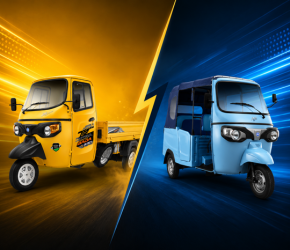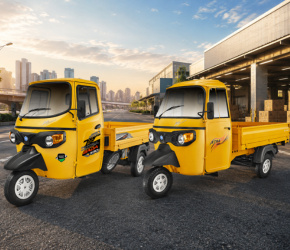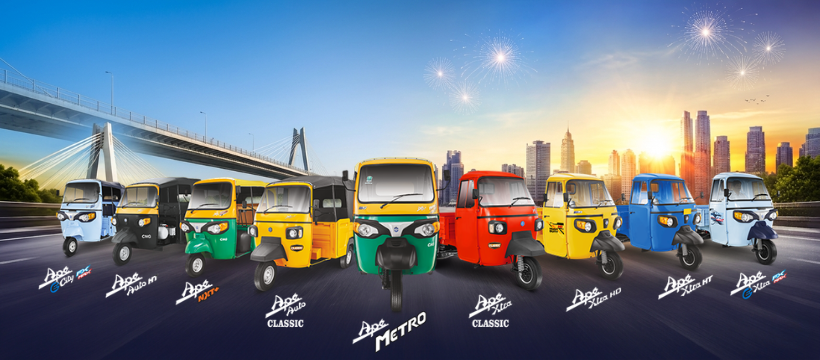
Walk into any busy Indian street, and you'll spot two very different versions of the same three-wheeled vehicle. One is stacked with boxes, bags, or produce heading to a market. The other has three passengers squeezed into the back, heading to a bus stop or school.
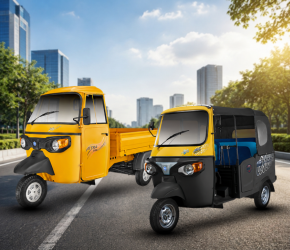
They look similar. But they're built for completely different jobs.
A 3-wheeler cargo vehicle, for instance, is engineered for high payload capacity, typically handling 500–700 kg with ease, making it ideal for businesses that rely on efficient goods movement.
Whether it's a traditional cargo auto rickshaw or a modern e-rickshaw cargo model, these vehicles are built tough to support demanding logistics needs.
On the other hand, when you look at an auto rickshaw cargo versus a passenger variant, the difference becomes even clearer in functionality. Three-wheelers have become the backbone of last-mile mobility across India, powering both urban deliveries and daily commuting.
If you're planning to invest in a three-wheeler, understanding these differences is crucial. From design and usage to cost efficiency, choosing between a 3-wheeler cargo, a cargo auto rickshaw, or an e rickshaw cargo depends entirely on your business goals and operational needs.
Why This Difference Actually Matters in 2026?
This distinction matters more than ever right now because India is the world's largest market for electric three-wheelers. According to the IEA's Global EV Outlook 2025, India's electric 3-wheeler sales rose 18% year-on-year to approximately 7 lakh units in 2024. Buyers are making purchase decisions worth several lakh rupees, and choosing the wrong vehicle type, even from a good brand, can mean years of underperformance.
So whether you're a fleet operator, a first-time commercial vehicle buyer, or a logistics company looking to electrify your last-mile delivery, understanding the design and functional differences between a 3-wheeler cargo vehicle and a three-wheeler passenger vehicle is the foundation of getting this right.
3-Wheeler Cargo vs Passenger Auto Rickshaw: Key Design Differences
Here's the thing most buyers miss: a cargo three-wheeler and a passenger auto rickshaw share the same basic silhouette: three wheels, one driver up front, a rear section behind. But put them side by side in an engineering workshop, and the differences are stark enough to belong to two completely different vehicle categories. Let's break it down, dimension by dimension.
1. The Rear Section: Load Deck vs Living Space
The most obvious split starts right at the back.
A cargo three-wheeler's rear is engineered for utility, raw, functional, and modular. Manufacturers design the rear body to accept multiple configurations: an open flatbed for produce or construction material, a closed box body for parcels and pharma goods, or a tipper for loose material.
Structural crossmembers run underneath to support deadweight stress. Nothing about this rear section is optimised for a human being's comfort, because no human being is meant to sit there.
The passenger auto rickshaw rear cabin is a completely different engineering brief. Grab handles, a metal or fibreglass roof, lateral entry width, seating foam density, and headroom clearance; every dimension has a direct impact on whether the person riding in the back feels safe and comfortable or cramped and rattled.
2. Chassis Architecture: Heavy Lifter vs Smooth Carrier
Underneath both vehicles, the chassis tells a completely different story.
A cargo three-wheeler uses a heavy-duty ladder-type frame, reinforced at the rear axle mounts to handle concentrated point loads. When a 500 kg payload is stacked unevenly, which happens constantly in real-world delivery, the frame needs enough rigidity to resist flexing without fatigue cracking over thousands of kilometres. The chassis of a well-built cargo auto is, by design, overbuilt for the weight it carries.
The passenger e-rickshaw frame is engineered for ride quality, not raw load tolerance. A stiffer frame transmits every road imperfection directly to the passenger cabin. So the chassis is tuned in combination with the suspension setup to absorb road vibration before it reaches the seats.
The Piaggio Apé E-City, for example, achieves 220 mm ground clearance enough to handle India's notoriously uneven roads while maintaining a ride quality that makes daily commutes bearable for passengers.
3. Suspension and Ride Dynamics: Payload Handling vs Passenger Comfort
Suspension is where the design philosophy of cargo versus auto rickshaw passenger vehicles separates most clearly and where the wrong choice hurts most.
A cargo three-wheeler runs stiffer suspension, calibrated to handle a heavy, shifting payload without bottoming out. Load it up to rated capacity, and the suspension works as intended. Run it empty, and the ride is noticeably bouncy. That's not a defect, it's physics. The spring rate is set for load, not for an empty deck.
A three-wheeler passenger vehicle does the opposite. The suspension is calibrated for a live, shifting load of three to four adults who lean into corners, shift their weight, and react to road conditions. The spring rates are softer. The dampers are tuned to absorb impact rather than resist it.
Run a passenger suspension under heavy cargo, and it bottoms out on speed breakers. This is exactly why mixing the two categories creates expensive mechanical problems fast.
4. Body Structure and Safety Engineering
This is the design difference that matters most and gets discussed the least.
Cargo three-wheelers are built to protect the driver and the goods. Side rails on the load body prevent cargo from shifting off the deck. The driver cabin has basic impact protection roll-over bars, a windshield, and structural pillars. These are commercial workhorse vehicles, and they're built accordingly.
The passenger auto rickshaw, when engineered properly, goes further. Side-impact structural beams protect the passenger cabin during collision scenarios. A strong chassis plays a crucial role in maintaining structural integrity during rollovers. Piaggio's passenger Apé range, for instance, is built on a robust chassis platform that enhances overall stability and passenger safety. These structural strengths come standard, not as optional add-ons, ensuring reliable protection in everyday use.
The three-wheeler passenger standard is a direct result of regulatory pressure and passenger expectations rising together. States with active shared mobility schemes often mandate minimum safety specs, and operators who bought on price alone, without checking these specs, have had to retrofit or replace vehicles mid-contract. Not a position anyone wants to be in.
The passenger e-rickshaw in its electric form adds another layer of safety consideration: battery placement. Unlike a fuel tank tucked underneath, a lithium-ion battery pack affects the vehicle's centre of gravity and crash behaviour. We at Piaggio place the battery low and central, improving stability and protecting the pack from side impacts.
Cheaper entrants often place batteries wherever packaging allows, which creates long-term safety and maintenance risks.
5. Driver Cabin: Operator Tool vs Ergonomic Workspace
The driver sits in the same basic position across both vehicle types, but the experience of driving a cargo auto versus a three-wheeler passenger vehicle for eight hours straight is very different.
Cargo operators are focused on the vehicle's working ability: visibility for manoeuvring in tight loading zones, easy access to the load area, a cab that can take a knock and keep going. The cabin is stripped to essentials. The steering column, instrument cluster, and switchgear are functional and durable.
Passenger vehicle operators care about driver fatigue because a tired driver affects ride quality, safety, and passenger confidence. Premium passenger auto rickshaw models from established brands invest in wider seats, better seat cushioning, lower vibration handlebars, and instrument clusters that give the driver genuinely useful information like remaining battery range per the current driving pattern, not just a static percentage figure.
The Piaggio Apé E-City's onboard digital cluster with integrated telematics is a good example of this thinking done right. For an auto rickshaw passenger operator running a school route or a shared mobility contract, knowing real-time range, speed, and vehicle health isn't a nice-to-have; it's how they manage their schedule and avoid disruptions.
The table below captures why every auto rickshaw passenger operator and every cargo fleet manager should treat these as distinct purchase decisions, not variations of the same vehicle.
| Design Element | Cargo Three-Wheeler | Passenger Auto Rickshaw |
|---|---|---|
| Rear body | Load deck (flatbed/box/tipper) | Enclosed passenger cabin |
| Chassis reinforcement | Rear axle heavy-duty | Full-frame ride quality tuned |
| Suspension calibration | Stiff — set for payload load | Softer — set for passenger comfort |
| GVW range | 900 kg – 1,300 kg | 600 kg – 900 kg |
| Payload capacity | 496 kg – 750 kg | 3 to 4 passengers + driver |
| Safety focus | Driver + load protection | Passenger cabin + side impact |
| Motor tuning | High torque at low speed | Balanced torque and range |
| Driver ergonomics | Functional, durable | Fatigue-reduction focused |
| Battery placement (EV) | Variable | Low and central for stability |
"If you look at a cargo three-wheeler and a passenger e-rickshaw and see the same vehicle in different clothes, you're looking at the surface. Underneath, they're engineered for different physics, different human loads, and different daily operating realities."
Getting this right at the purchase stage is far cheaper than finding out through mechanical failure or regulatory trouble after the fact.
Why the Piaggio Apé Stands Apart in Both Segments?
Piaggio Apé range of 3-wheelers reflects decades of refinement in three-wheeler design, built around real-world durability and operator needs.
On the cargo side, models like the Apé E-Xtra FX Max and Apé EV Cargo are designed for intensive urban logistics. With fixed and swappable battery options, this electric cargo auto minimises downtime and improves efficiency for high-frequency operations.
For passenger mobility, the Apé E-City stands out as a reliable electric passenger auto rickshaw, offering strong ground clearance, spacious cabins, and dependable performance. It is well-suited as a passenger auto three-wheeler for daily city and semi-urban routes.
Backed by a wide service network and strong customer trust, Piaggio continues to offer practical solutions across both cargo and passenger segments.
Which One Should You Buy?
The choice between a 3-wheeler cargo and a passenger auto rickshaw ultimately depends on your business needs. If your goal is to transport goods efficiently, a cargo auto rickshaw or even an ace EV cargo model can help you maximise productivity and earnings.
If you are focused on generating income through mobility services, then a passenger auto rickshaw or an electric passenger auto rickshaw is the better fit. The passenger auto three-wheeler segment continues to offer steady income opportunities across both urban and rural markets.
At Piaggio, we offer reliable solutions across both cargo and passenger categories, helping you choose a vehicle that aligns perfectly with your business goals.
Conclusion
Cargo and passenger three-wheelers may look similar, but they are built for entirely different purposes. A 3-wheeler cargo vehicle focuses on strength, load capacity, and efficiency, while a passenger auto rickshaw prioritises comfort, safety, and passenger experience.
With the rise of electric mobility, both electric cargo auto and passenger e-rickshaw options are becoming more viable and cost-effective. Whether you choose an auto rickshaw cargo vehicle for business logistics or a three-wheeler passenger vehicle for transport services, understanding these differences will help you make a smarter investment.
Frequently Asked Questions
1. What is a cargo three-wheeler?
A cargo three-wheeler is a small commercial vehicle designed to transport goods. It typically has a strong rear load body, higher payload capacity, and is used for last-mile delivery, logistics, and small business operations in urban and rural areas.
2. What is the difference between a cargo van and a passenger van?
A cargo van is built to carry goods with empty rear space, while a passenger van is designed with seats, windows, and comfort features to transport people safely and comfortably.
3. What is the difference between passenger vehicles and commercial vehicles?
Passenger vehicles are used to transport people, focusing on comfort and safety. Commercial vehicles are built for business purposes like carrying goods or passengers for hire, prioritising durability, load capacity, and operational efficiency.
4. What is passenger cargo?
Passenger cargo refers to luggage or goods carried along with passengers in a vehicle. It includes personal belongings stored in designated spaces without affecting passenger comfort or safety.